Winner of the Juniper Prize for Poetry from the University of Massachusetts Press

“In tortuously
rich poems, this book records a private coming to terms.”
“Barnes’s poetry admits homesickness driven by shame, guilt, love, and most of all, a search for some kind of truth to be found in the place the speaker damns and praises, loves and left.”
—Dara Wier
-
“In Landscape with Bloodfeud, there are at least two ways to go. There is a path to some kind of justice, and there is a path to the end of mercy.” Dara Wier
Scarred by nuclear smokestacks, oil wells, and surging floodwaters, and haunted by the legacies of slavery, racism, and French rule, the Louisiana of Landscape with Bloodfeud is disenchanted but still exerts an undeniable pull.
Reckoning with displacement, ancestral guilt, and centuries of human and environmental exploitation, Wendy Barnes dissects the state’s turbulent past—as a microcosm of colonial oppression, westward expansion, and the birth of global capitalism.
With an expat’s detachment, our Louisiana-born speaker contemplates her fraught relationship with her home culture and her white working-class roots, raising questions about complicity and shame, as history “bleeds us all for its tax, some for more, / digging down into every wet wound, / digging down among the taproots, under old folks’ / marble tombs or unmarked graves.”
UMass Press, 2022
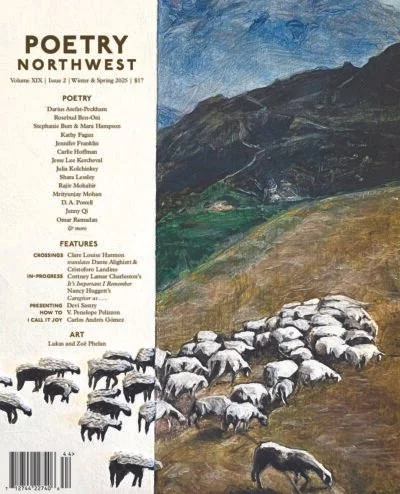
Review in Poetry Northwest:
“A Poet of the American Storm”
“As the United States seems ready to catch fire, Wendy Barnes’s debut collection, Landscape with Bloodfeud, urges us to ask ourselves, how can we bear witness to a history that we must move beyond? In poems that reveal a microcosm of the U.S. in her home state of Louisiana, Barnes not only critiques the rise of environmental exploitation and racial capitalism, but also confronts the moral questions that critics of these social systems face: how are we complicit in the violence that engulfs us, and can we create a different culture by facing a truer history of our own lives?
—Amy Klein, “A Poet of the American Storm: On Landscape with Bloodfeud by Wendy Barnes,” Poetry Northwest
More praise for Landscape with Bloodfeud
“There is an eloquent and brave kind of cartography here. These poems have in them a burgeoning, a flood of language, image, culture, and a stark interrogation of the American self that make them essential. ‘Welcome / to the parish of fenced-in / vernacular.’ Landscape with Bloodfeud is an exquisitely crafted and mesmerizing debut collection.”
—Sean Nevin
“Landscape with Bloodfeud is remarkable for its paradoxical strengths: its descriptive power and delicacy, its weave of linguistic panache with rhetorical nonchalance, the sheer scale of the conception and the line-by-line finesse. Remarkable already, even before the reader takes in that the whole bloody saga takes place on a tightrope of conscience.”
—Robert Carnevale
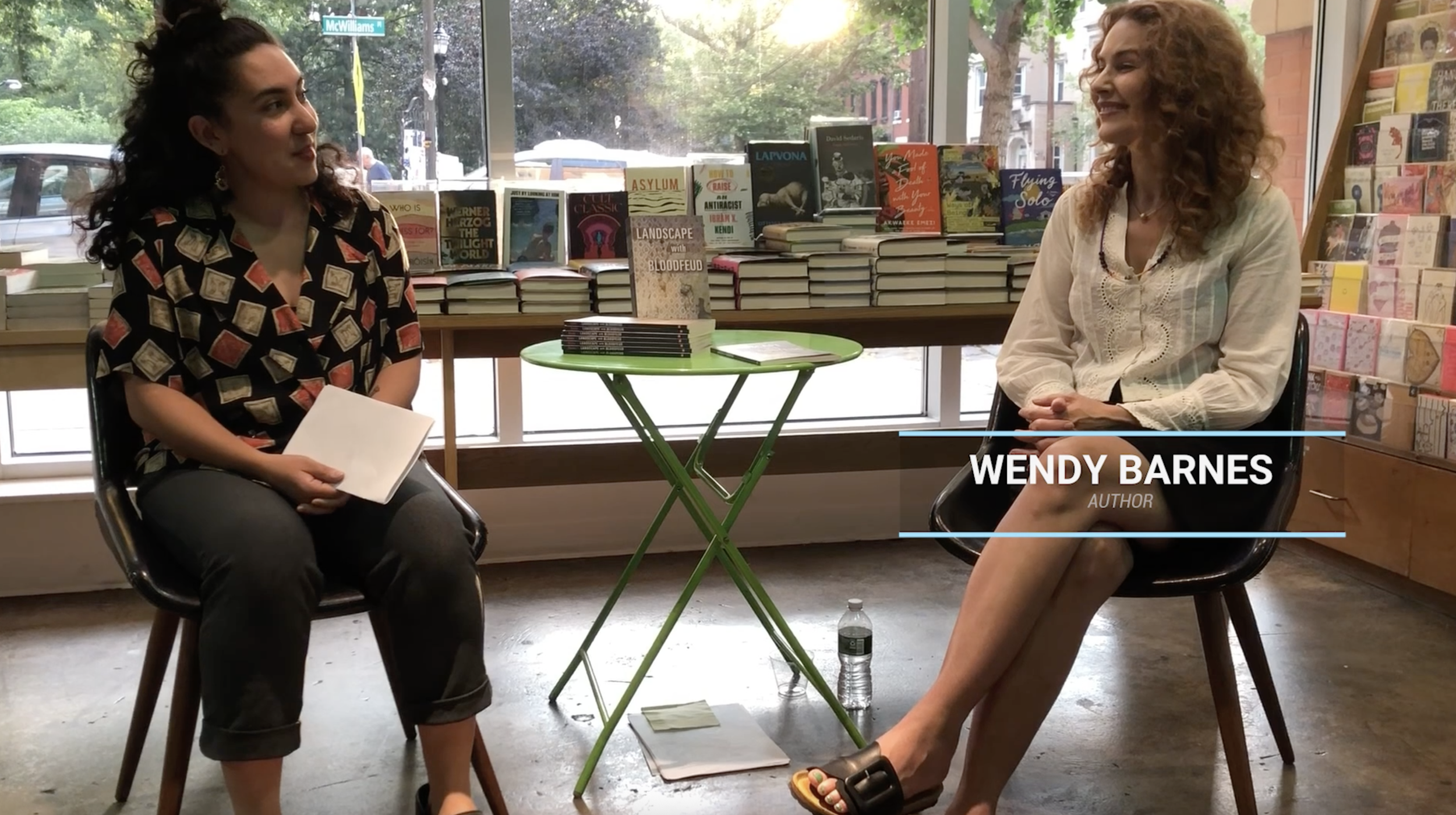
In conversation with Sara Bella Munjack
Book Launch and Interview with Sara Bella Munjack at Word Bookstore, Jersey City
SBM: I wonder if you could speak a little more broadly to how the book grapples with history and time passing as a concept?
WB: Once I located the speaker and the necessity of the speaker’s analysis of her own whiteness as being so integral to the book, it really became the center of a lot of the poems. The speaker is aware of being the locus of this urgent crossroads in culture—which I think is personal in terms of feeling the obligation to try to understand the past and recognize one’s privilege and to try to understand how one moves forward (with that knowledge)….And the speaker has a sense of being this consciousness which is also the American consciousness, that we as a culture are at this crossroads trying to assess the past and look at the possibilities of the future, but are in many ways stymied.